
Karbi Traditional Musical Instruments
Instrument Name
Kum
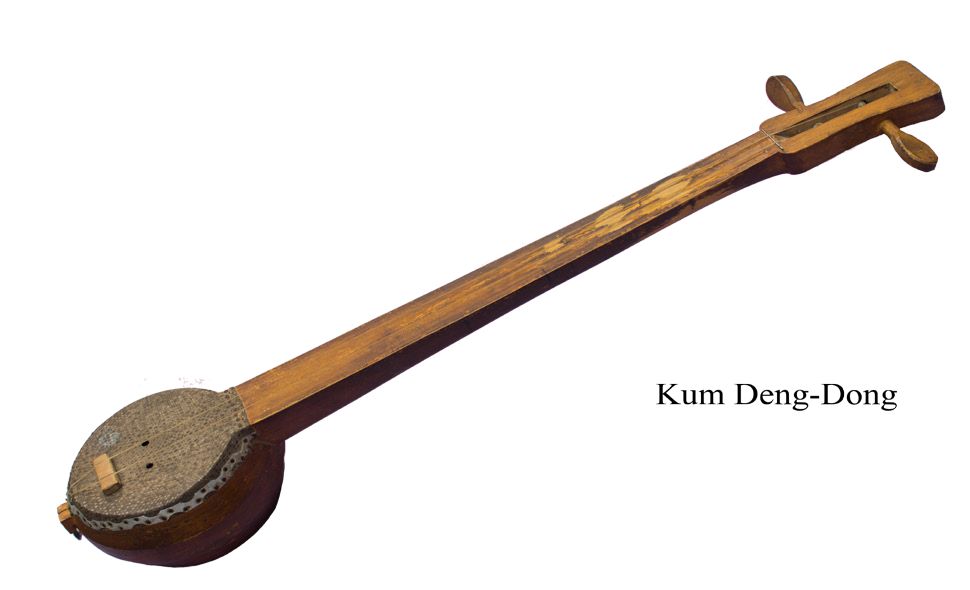
Kum - is the generic name given to string instruments or cordophone, which has two varieties —
a. Kumdengdong – is a two-stringed lute played by fingering on the two strings alternately to produce the ‘deng-dong’ sounds. The strings pass over a sound box made of coconut or wood across the lengthened neck or finger board from a string-holder at the base to the head. The strings are made from the tough fibre of a plant called mengsuri (Sterculia villosa) is stretched from the pegs to the soundbox over a bridge, which is covered with goat skin. Scholars call this type of lute as ‘quite different...where the body is a separate resonator made of coconut.’
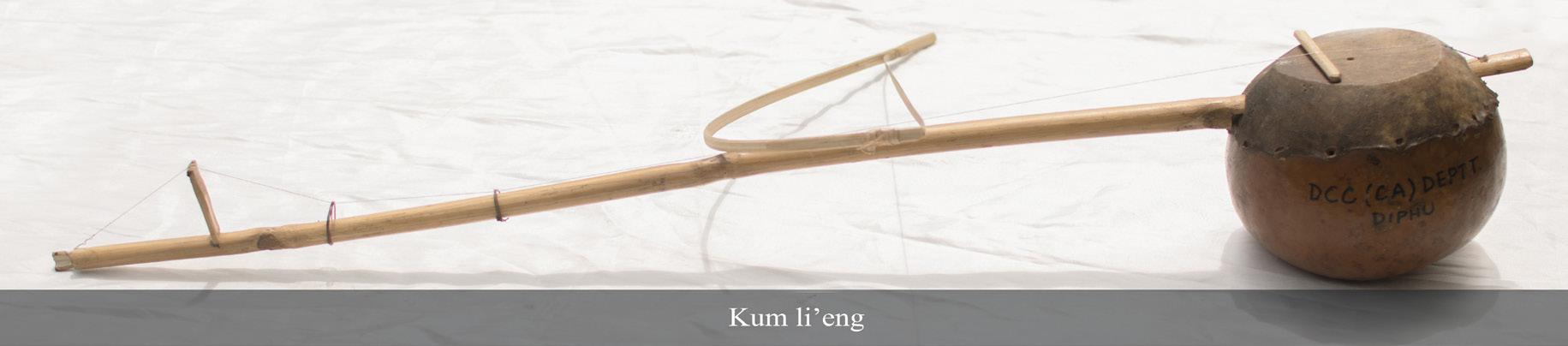
b. Kum li’eng – it is named so because the one stringed fiddle (or viol) played using a bow produces ‘eng eng’ sounds. The resonator is made from a gourd shell and resembles the typical spike-lute. The player rests the base of the instrument on the ground steadied by his left or right toe. The string is traditionally made of a strong fibre of mengsuri. It is a very versatile and creative instrument which gives an absolute ease and freedom to a folk artiste to play his mood..
Krongchui
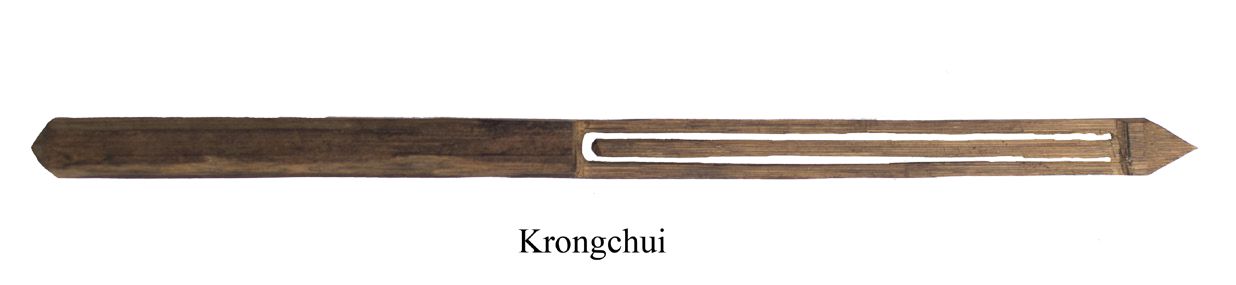
Krongchui - is a member of the lamellophone and the instrument is generally used by unmarried youth. Married women avoid playing this instrument, a local version of the ‘Jew’s harp’- which is held between the teeth and struck with a finger where the mouth serves as the resonator. It can produce only one note, but harmonics are sounded by the player altering the shape of the mouth cavity. The instrument is either made of bamboo or iron.
Krongchui was used by unmarried youth of opposite sexes to serenade each other – girls would ask their male friends to make the instrument as the initial gesture to express their love. Youth in their prime in older days would carry as essential items in their ‘jambili’ (unsewn sling bag) such as mori (flute), krongchui (jew’s harp), ingthi (woven comb), mori aso (reed) etc. Girls also thrust krongchui into the tuft of their hair when they go out into the wild venturing for vegetables or fire wood in older days.
Mori Tongpo
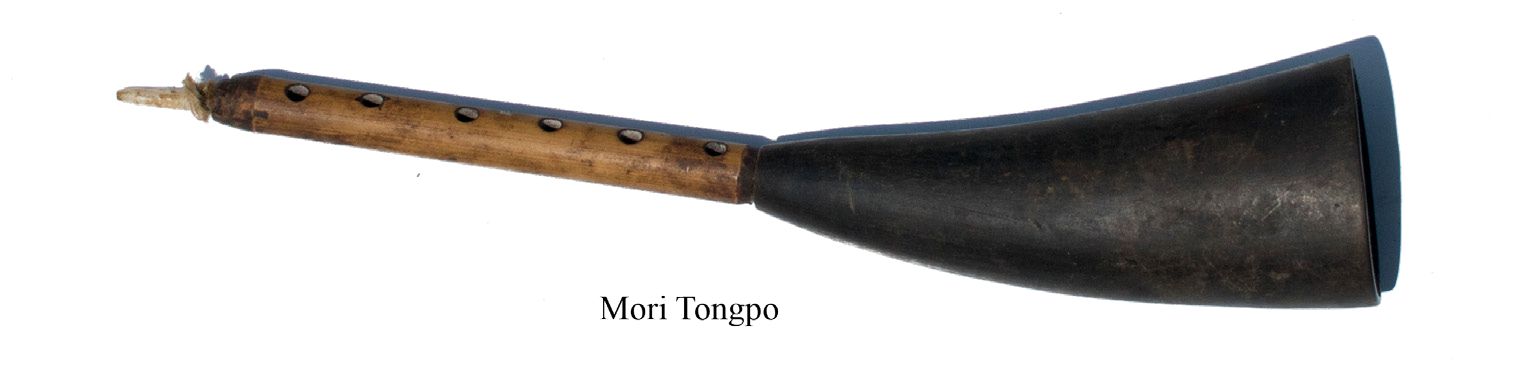
Mori Tongpo - bigger than Morijangkek and made of wood which is also known by its other name called ‘Mori Inglu’; this variety has 7 (seven) finger holes. The holes are made by using ‘primsok’ (thorn). Certain tunes/melodies associated with death cannot be played. Such melodies are reserved for occasions like Chomangkan. There are competitions in Chomangkan. There is no taboo against a female playing the instrument, but it is not played in general.
Pongsi
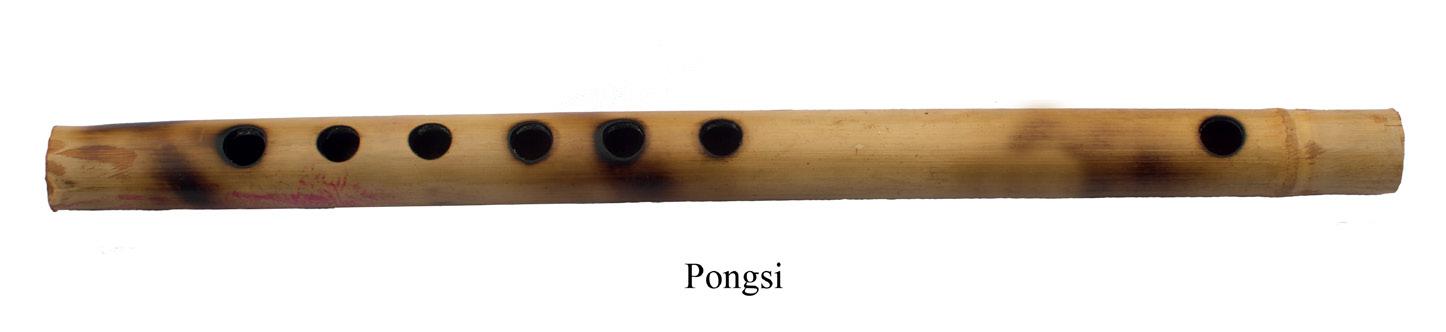
Pongsi - is the Karbi version of bamboo flute with 5 or 7 finger holes which can produce a range of traditional melodies to express joy and sadness (pongsi ningri).
Cheng - Drum is indispensible to Karbi life
Cheng has played key rhythmic factor in Karbi traditional life giving the people their artistic and spiritual expression. Karbis give great importance to both Cheng (drum) and Duhuidi (drummer) who alone can guide the souls of the dead to the world of ancestors. Both Cheng and Duhuidi therefore have an important shamanistic role to play in the traditional death ritual of Karbis. Without Cheng, a Karbi death ritual cannot be complete.
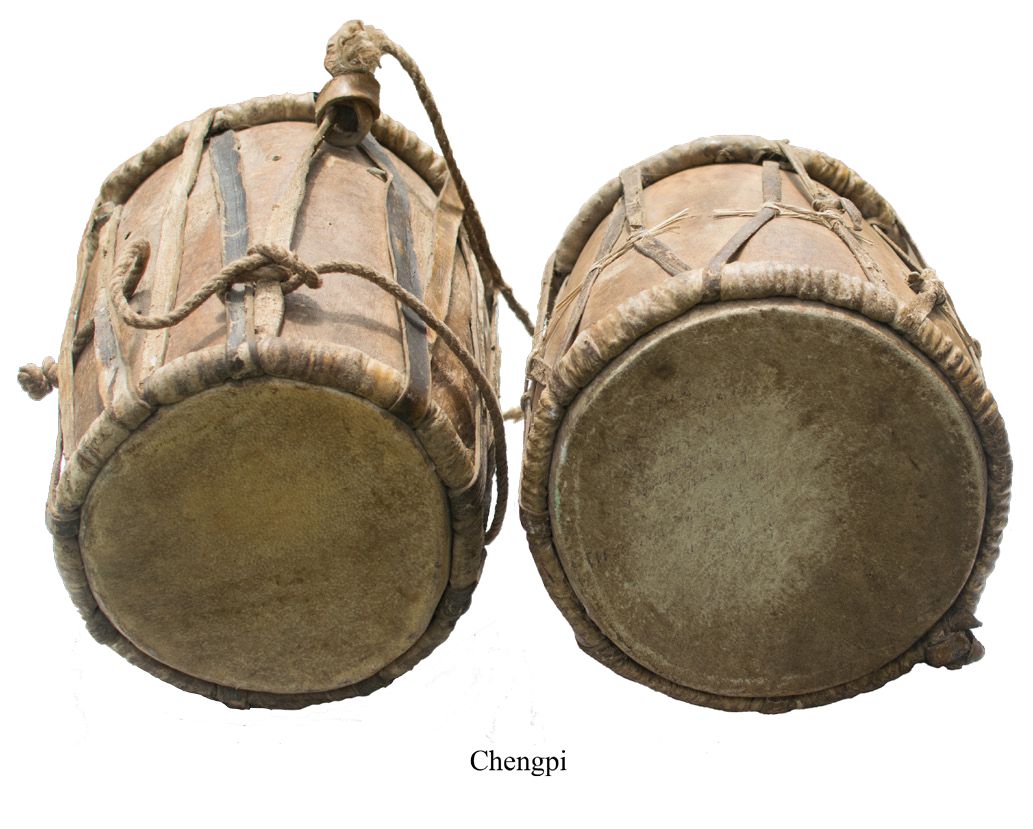
Chengpi - is a double-headed laced drum, made of a hollow or hollowed out trunk of Phang (Gmelina arborea) or similar other wood. The drum has a bigger head (amahang) and a smaller base (aling) with a slight bulge in the middle which gives the drum a conical profile. It is covered and tuned by laces ‘joining the striking head to a ring around the much smaller head’. Cheng Kindar (stout bamboo stick, thicker at the head which slims towards the base) and Cheng Baiko/Beko (wooden chisel with broad head and sharply tapered base) are used to tune the drum. A cane stick carved at one end called Chengbe is used to hit the face and the rear is stroked by left hand to produce at least 7 (seven) basic sounds, such as - krong, klur, kret, klek, (front face) and chong, cherok and Dip (rear face). There are various interesting legends of the origin of Chengpi which is played by master drummer Duhuidi during funeral festivals called Chomangkan. A rhythm called ‘kepalodok’ is played to the accompaniment of ‘Nimso Kerung’ dance at the funeral festival.
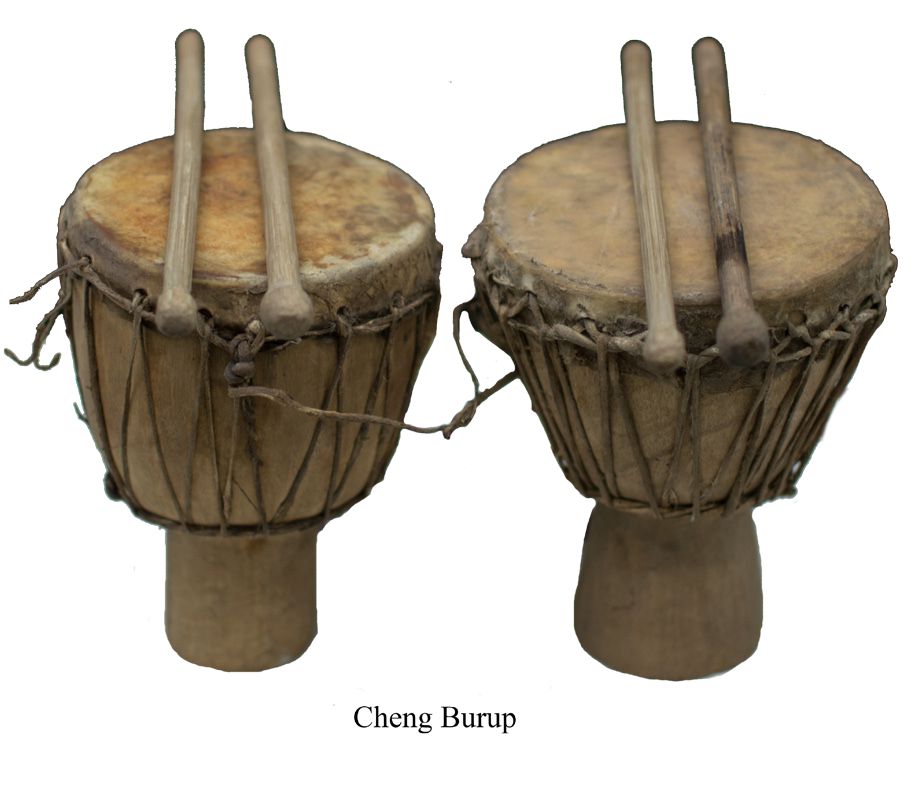
Cheng-burup - is a pair of wedge-laced drums shaped like inverted ‘burup’, a bamboo basket traditionally used for storing minor items of a Karbi household.The burup’s cone-shaped body is carved out of wood which is the drumhead or sound box covered with goatskin or other animal hides. The drum is tuned by tightening a network of laces covering the lower body as it tapers. According to scholars, ‘this type of head-fixing is not common in NE India, but it is widespread in island SE Asia and parts of Africa.’
Cheng Tumtum
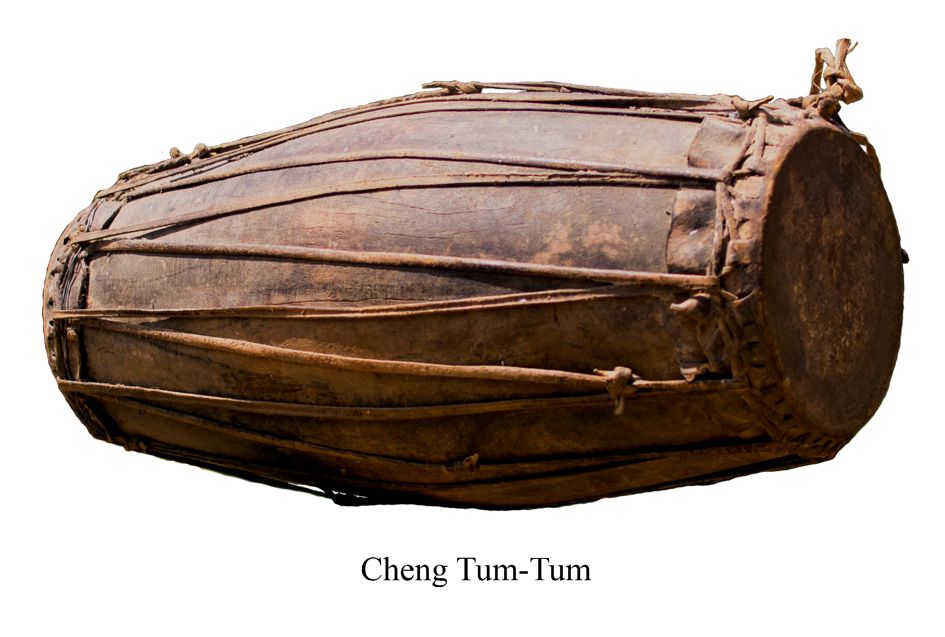
Cheng Tumtum – It is so called because of the ‘tum tum’ sounds that this drum produces and is made of a long shell of a large size. Both ends of the ‘tum tum’ is covered with goat skin and laced by one piece of rope. It is a Karbi version of biconical drum ‘where the drum swells in the middle and curves down towards the skin at either end.’ It is played together with Cheng Phulè to produce a dance rhythm performed by unmarried boys and girls at traditional funeral festival. The player hangs the drumaround his neck by a cord and beats both heads with palms.
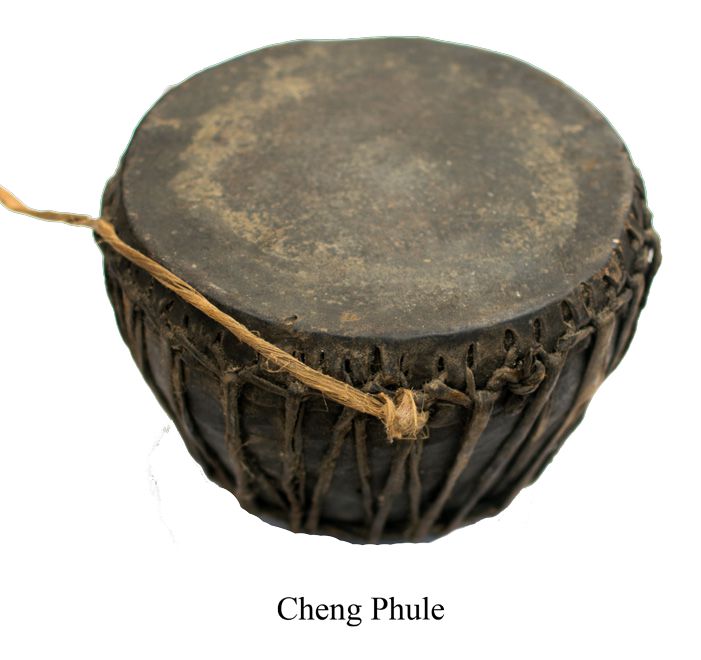
Cheng Phulè
Cheng Phulè – it is a laced single-headed conical drum and derives its name which resembles the shape of a pot or a bowl, Phulè, hollowed out from wood. It serves as the treble drum and pairs with Cheng Tumtum (bass) and the two instruments are played separately by two players to produce the funeral dance rhythm.
Kum li’eng
Kum li’eng – it is named so because the one stringed fiddle (or viol) played using a bow produces ‘eng eng’ sounds. The resonator is made from a gourd shell and resembles the typical spike-lute. The player rests the base of the instrument on the ground steadied by his left or right toe. The string is traditionally made of a strong fibre of mengsuri. It is a very versatile and creative instrument which gives an absolute ease and freedom to a folk artiste to play his mood..